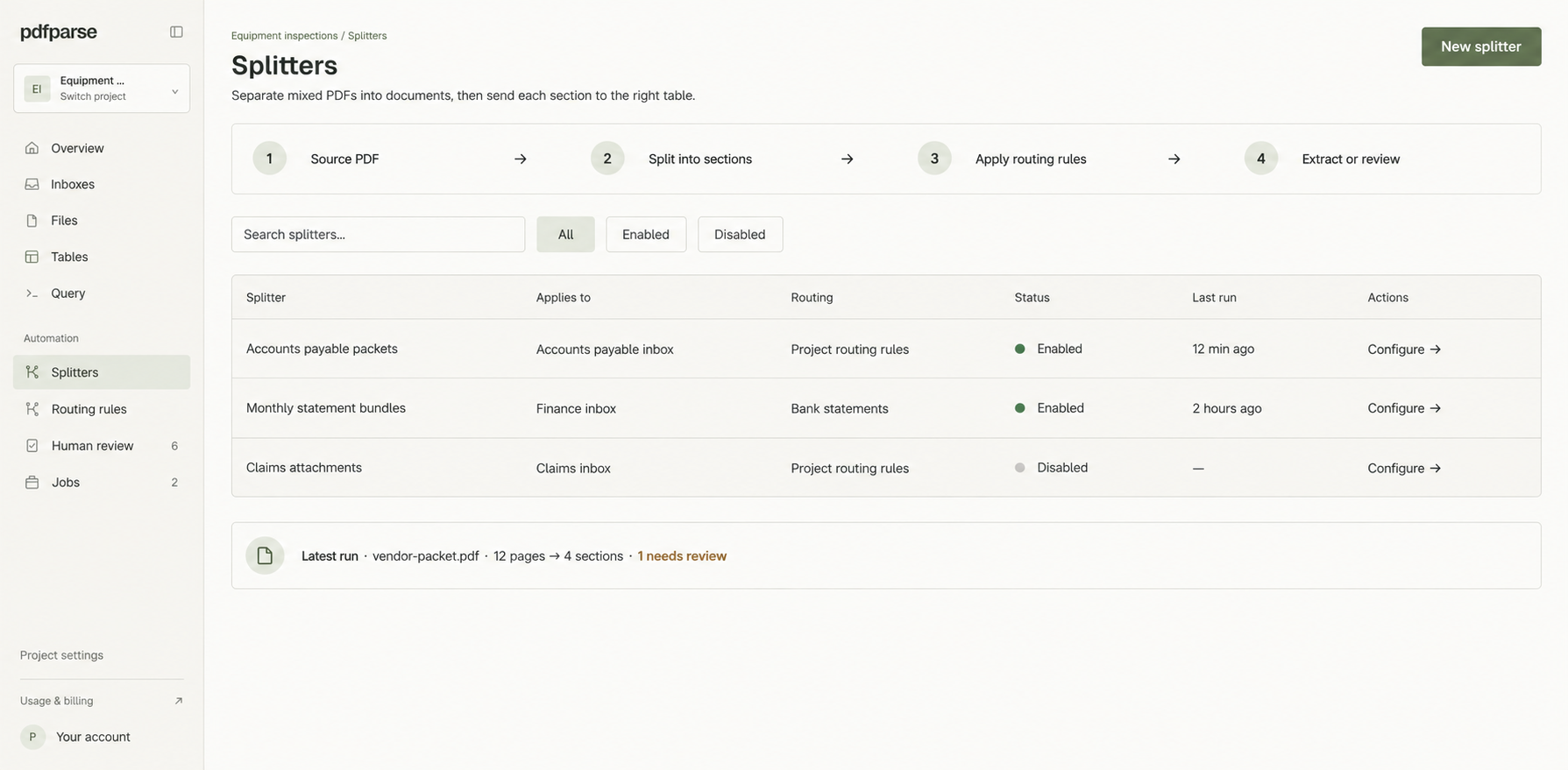
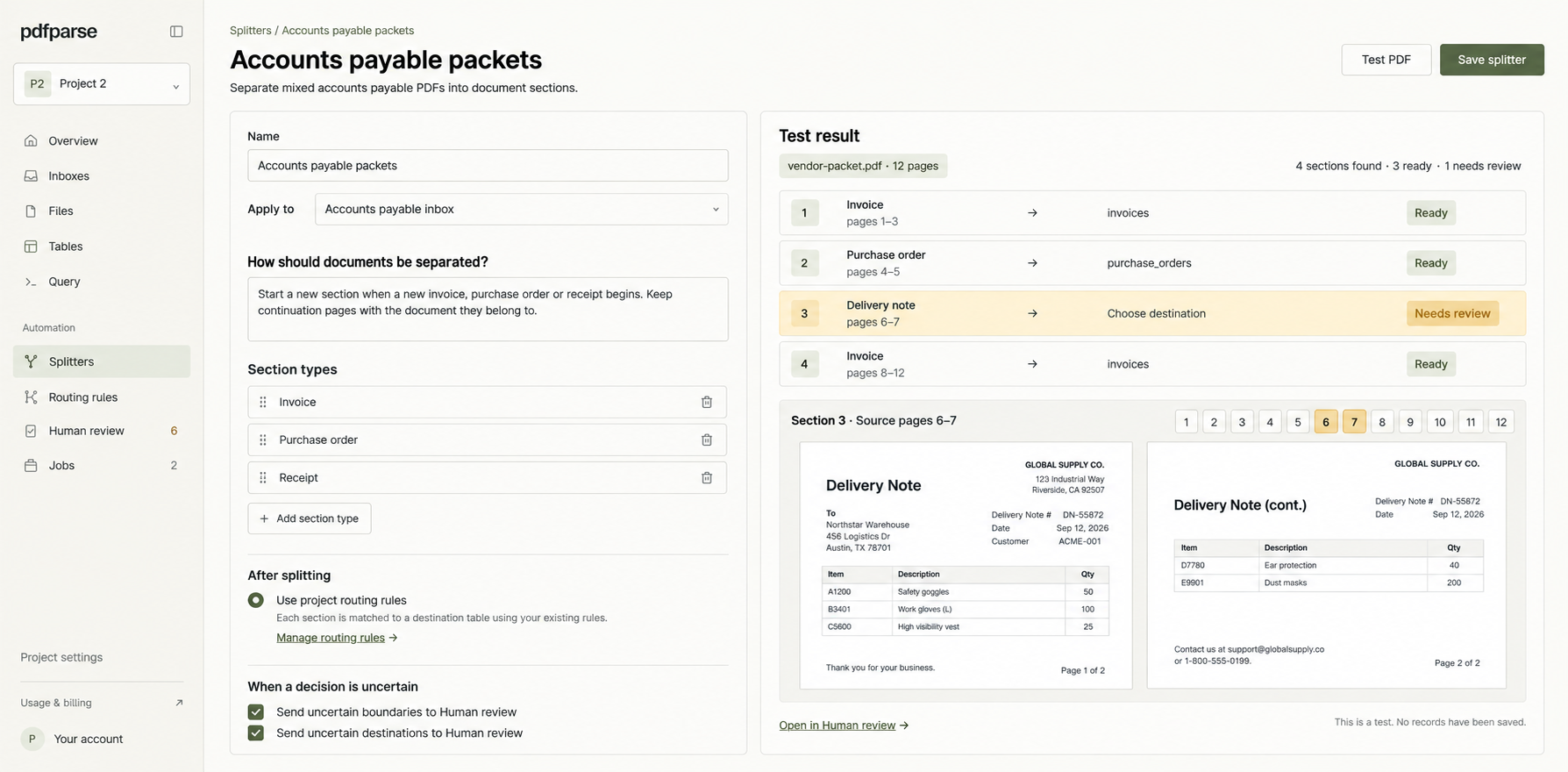
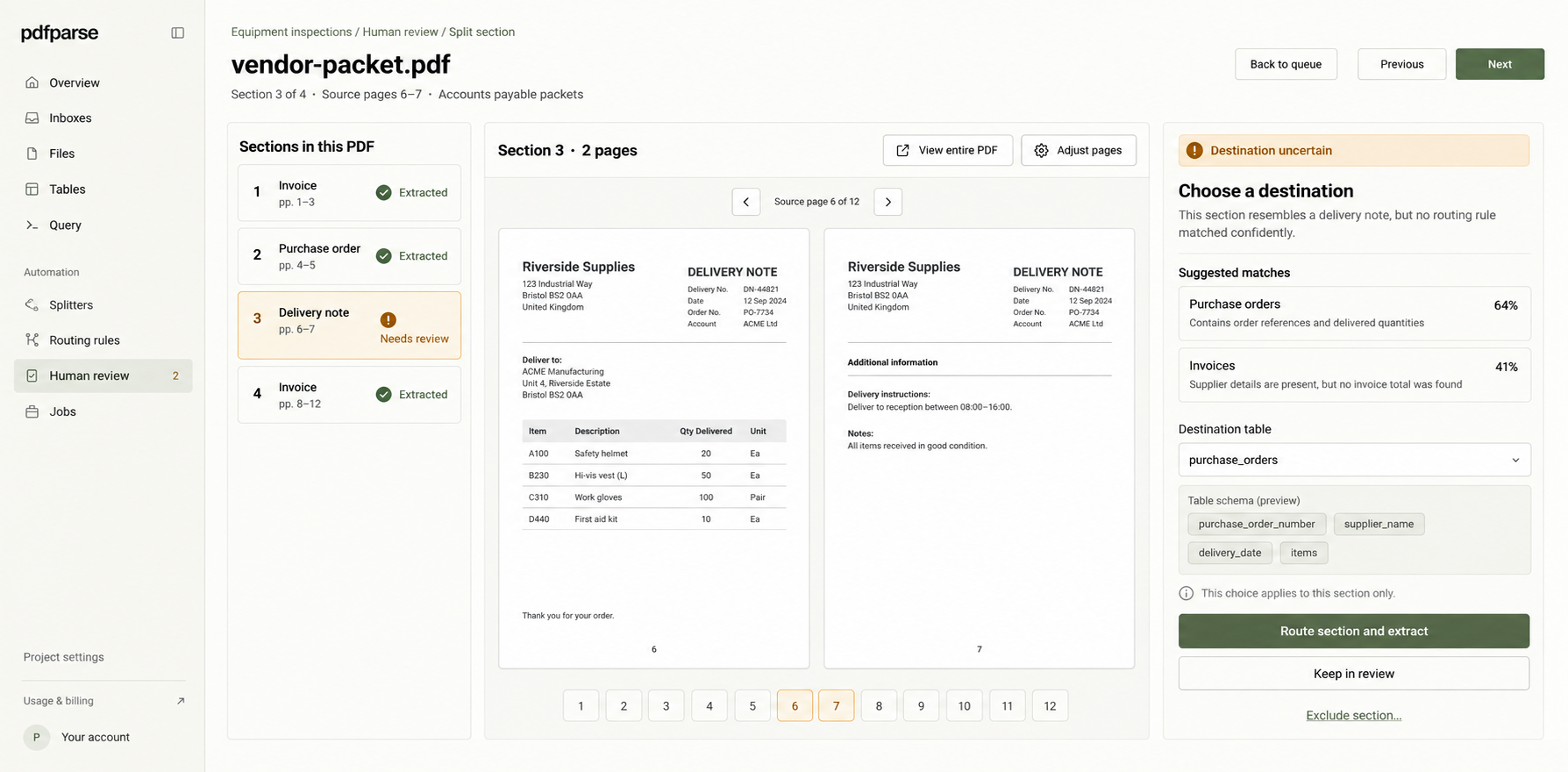
PdfParse is committed to building a fully automated documentation platform. To do this, we must create primitives where models can reason about large documents and figure out which parts of these documents belong where. Our splitter architecture is designed to do just this—users can submit large documents, and we will reason about and logically split the documents where we see fit. Humans can then review and modify the split configuration.
Increased logical capabilities
Before, PdfParse had a crude schema implementation; relationships were all baked into a single schema. If a user had created a schema with an invoice that had line items, PdfParse would create a nested representation of that document. This would make it simple if users expected the designed tables to be statically responsible for the sample document that was uploaded, but the implementation would break if the line_items relationship was expected to ingest a series of transactions from a purchase order or a different type of document. Data integrity would completely fall apart.
Using logical splitters
Using logical splitters fixes this by breaking up the relationship between a document and its schema. When a document is uploaded, it is analyzed to see which routing rule it is most related to. After this is complete, the logical splitter takes over—documents are grouped by pages, sent to the extraction workflow, and saved to the database. User-provided interfaces can then be used to verify correctness. This feature significantly strengthens our ability to position ourselves as a full document extraction platform.
Learn more
If you'd like to know more, you can check out the following articles:
- Engineering: Expanding PdfParse Capabilities With Logical Splitters
- Tutorial: How to Use Logical Splitters to Normalize Data From Multiple Sources
- Use case: Using Routing Rules, Emails, and Logical Splitters to Organize and Automate Company Financial Documents