Tutorials Sep 7, 2026
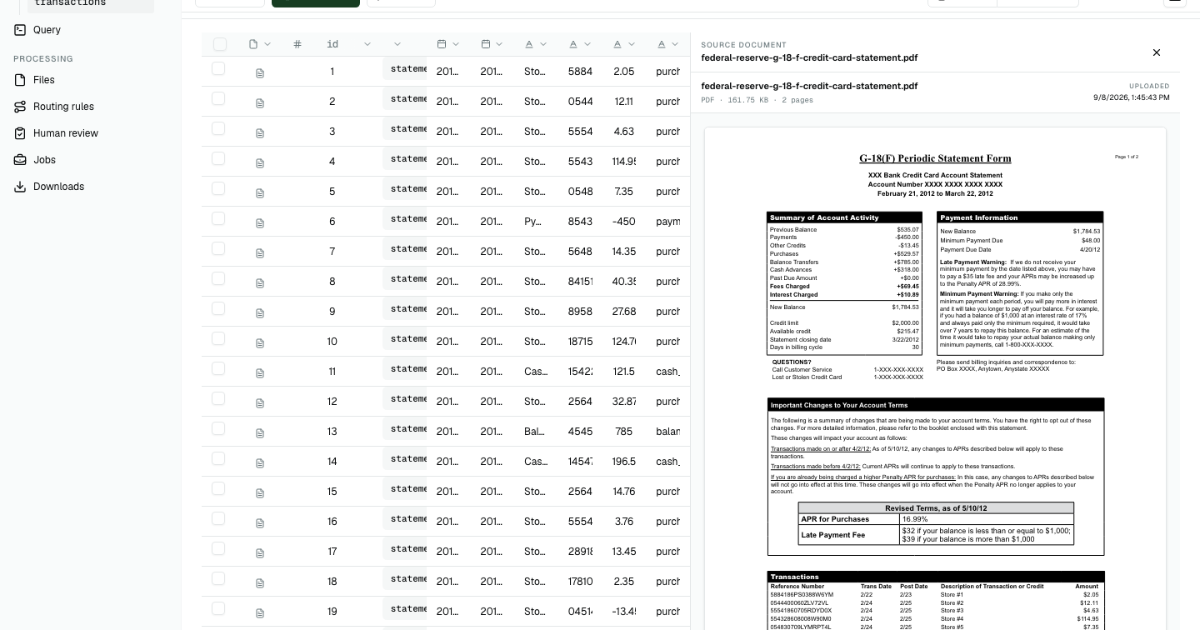
Turn real credit card statement PDFs into statement and transaction rows, check the values against each source, and export clean structured data.
Read article Tutorials Sep 7, 2026
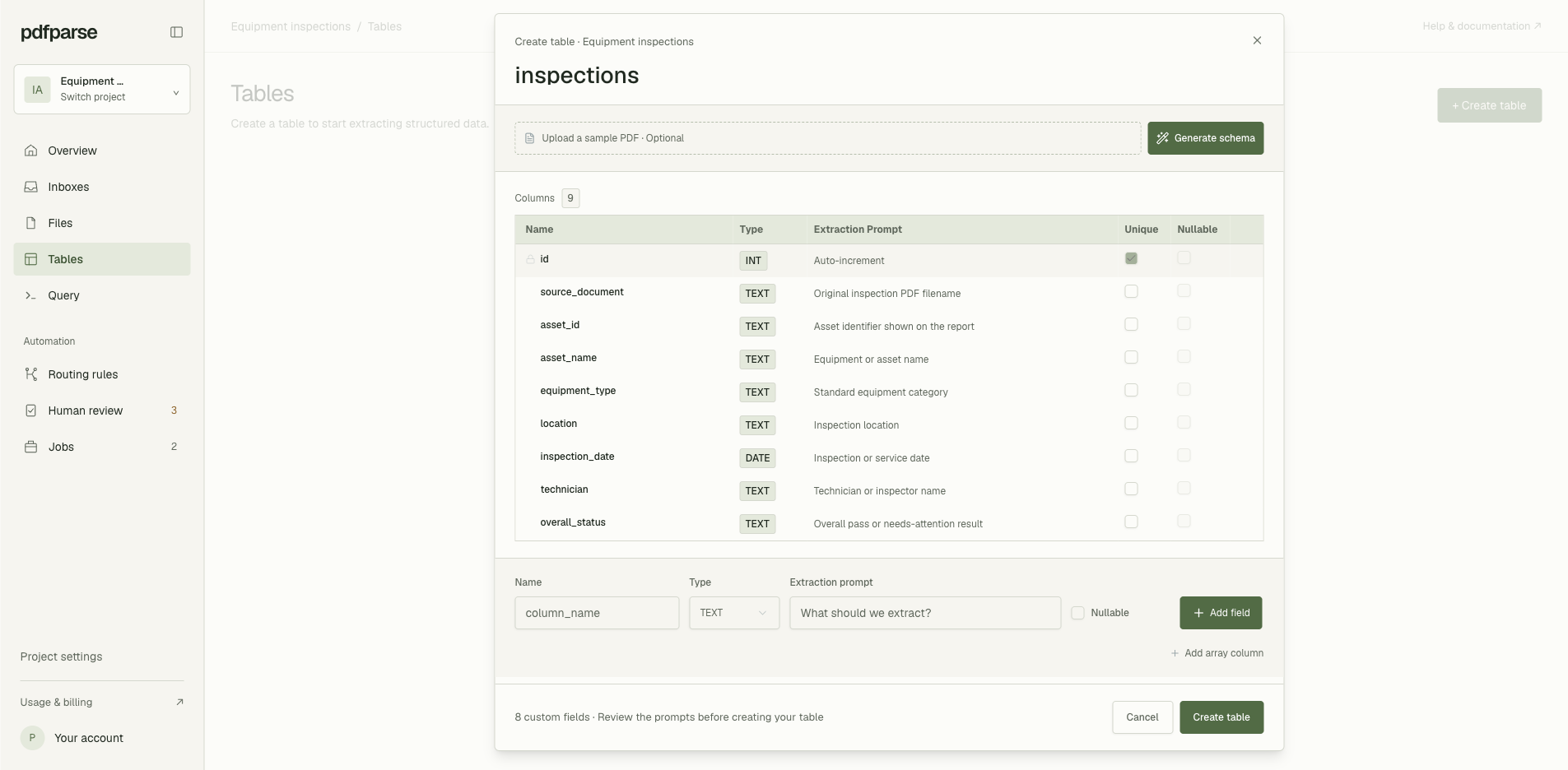
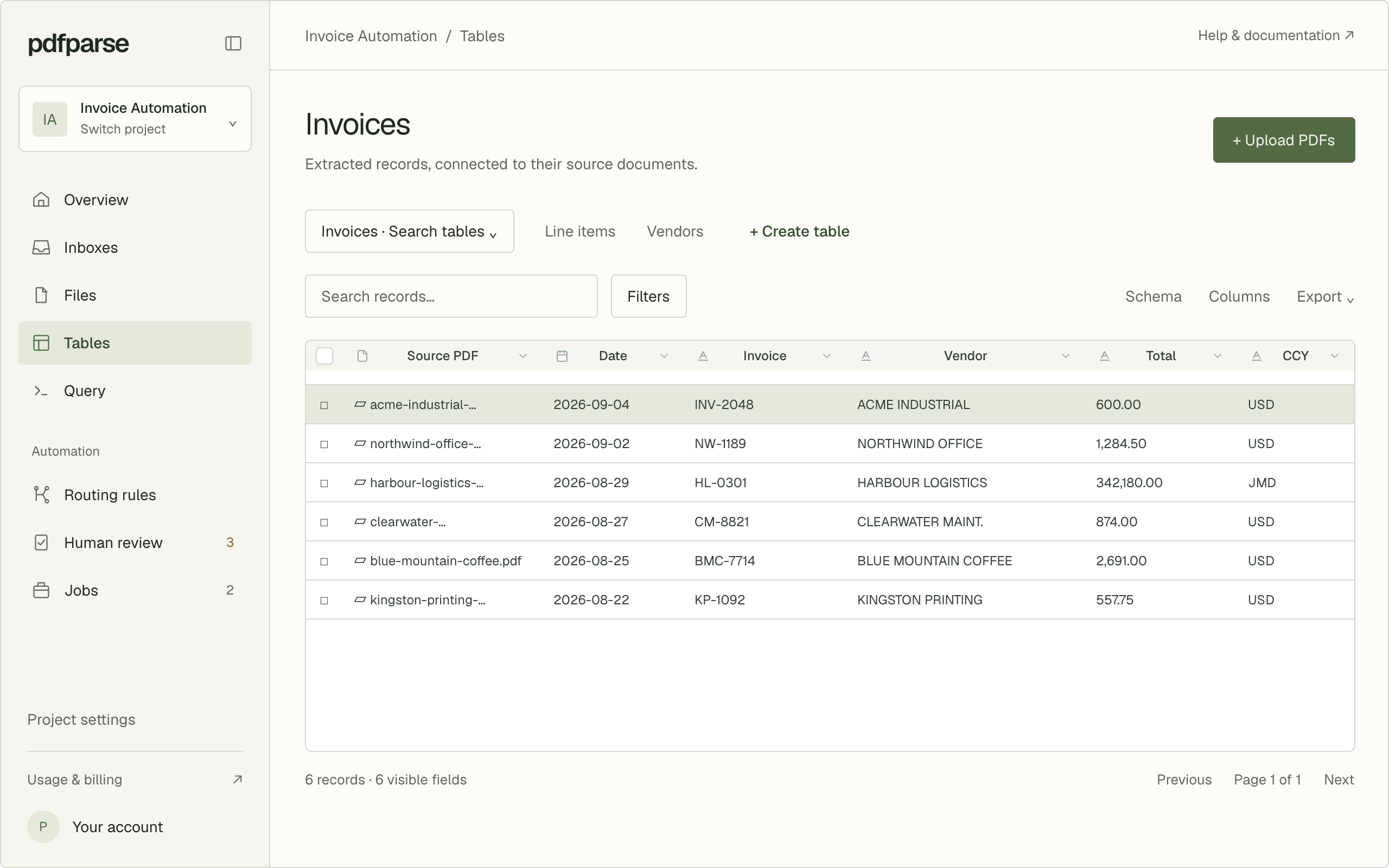
Turn differently formatted PDFs into consistent SQL tables. Define one reusable schema, preserve repeating rows, and query every document together.
Read article Tutorials Sep 7, 2026
Learn when to keep variable PDF data in JSON and when to use related child tables for records you need to query, compare, and export.
Read article Tutorials Jul 22, 2026
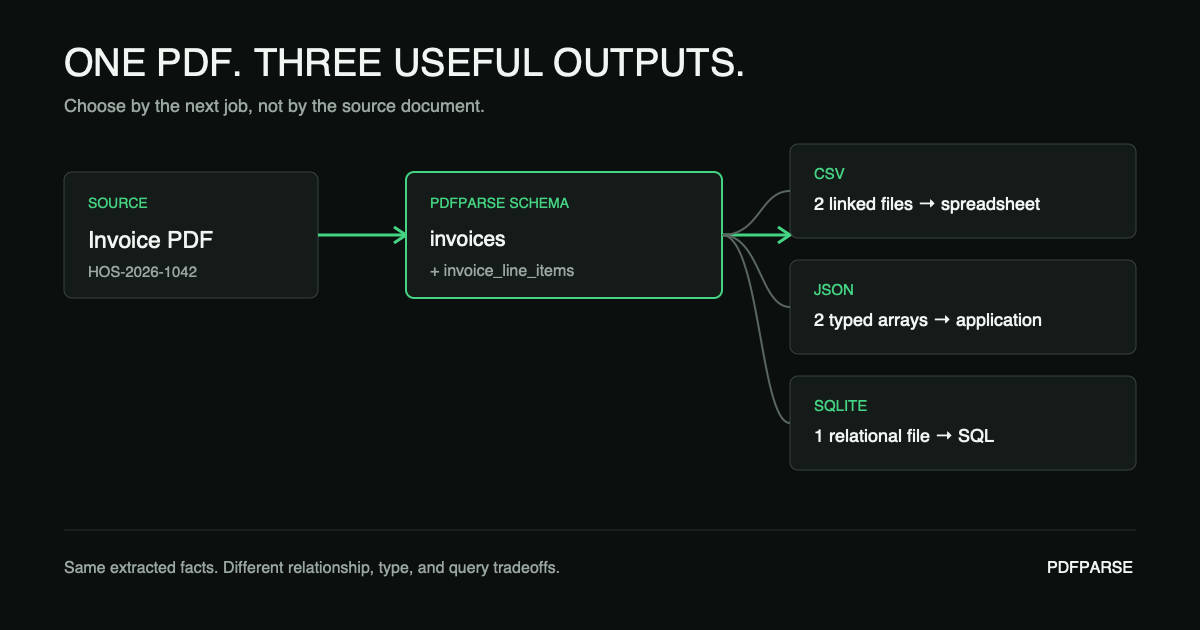
Extract a PDF once with a reusable schema, then choose CSV, JSON, or SQLite for spreadsheets, software integrations, and SQL workflows.
Read article Tutorials Jul 22, 2026
Convert PDF data into a SQLite database. Define related tables, process documents, run SQL queries, and export the complete database.
Read article Tutorials Jul 22, 2026
Extract a table from a scanned PDF to CSV with OCR. Keep rows and columns correct, check OCR errors, and validate the final file.
Read article Tutorials Jul 21, 2026
Convert a PDF table into a JSON array. Define a schema, preserve data types, process scanned PDFs with OCR, and validate the result.
Read article Tutorials Jul 21, 2026
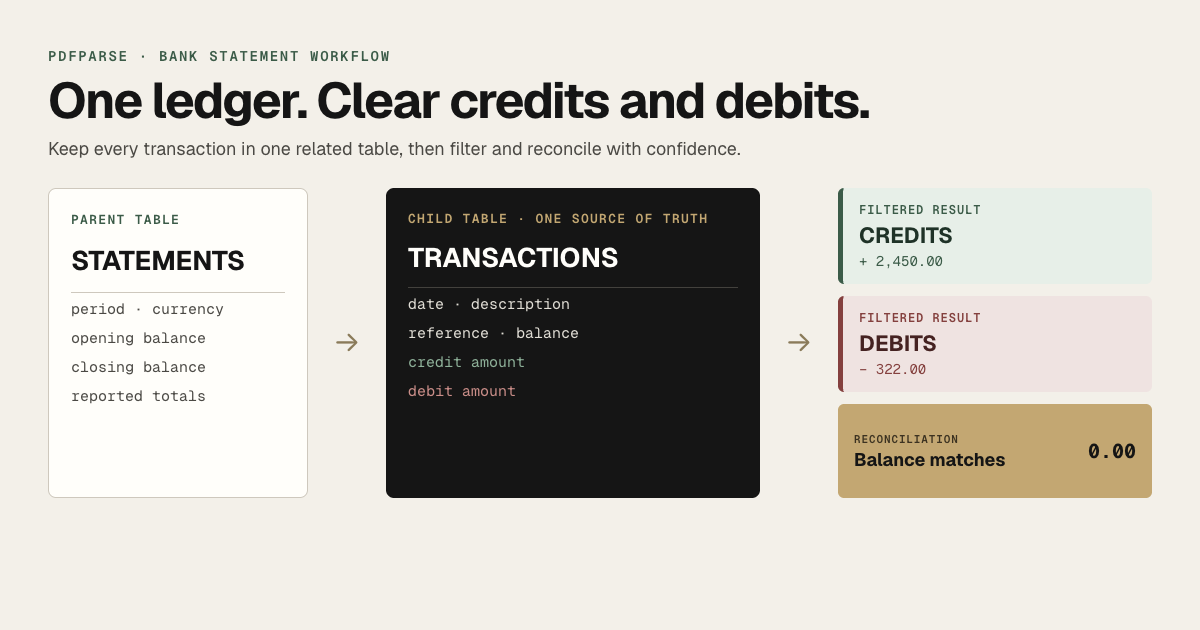
Extract bank statement transactions into related tables, separate credits from debits, reconcile the closing balance, and export reviewed data.
Read article Tutorials Jul 21, 2026
Convert a PDF table to CSV. Keep rows and columns correct. Learn how to process digital and scanned PDFs, merged cells, and complex tables.
Read article Guides Nov 19, 2025
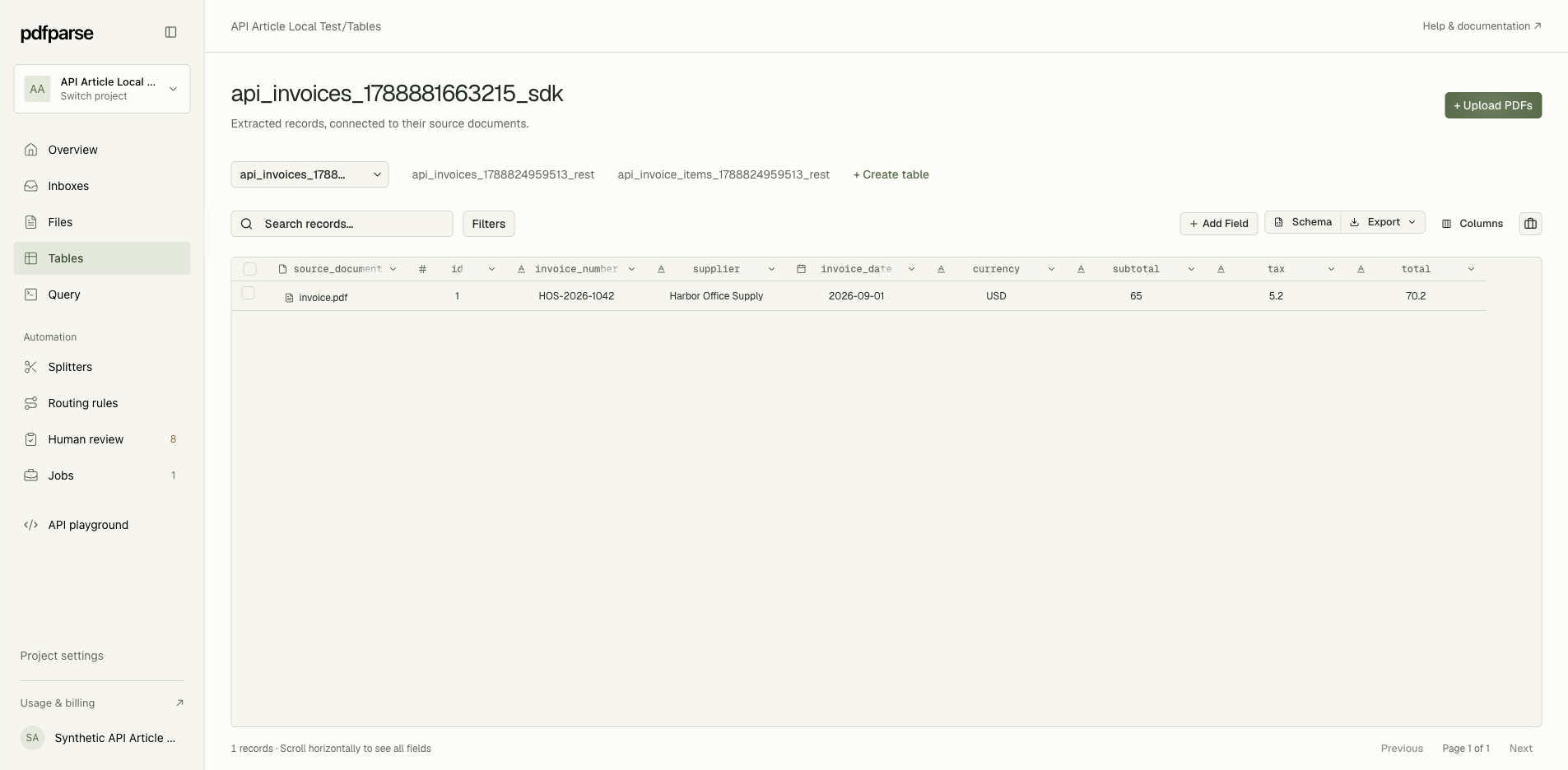
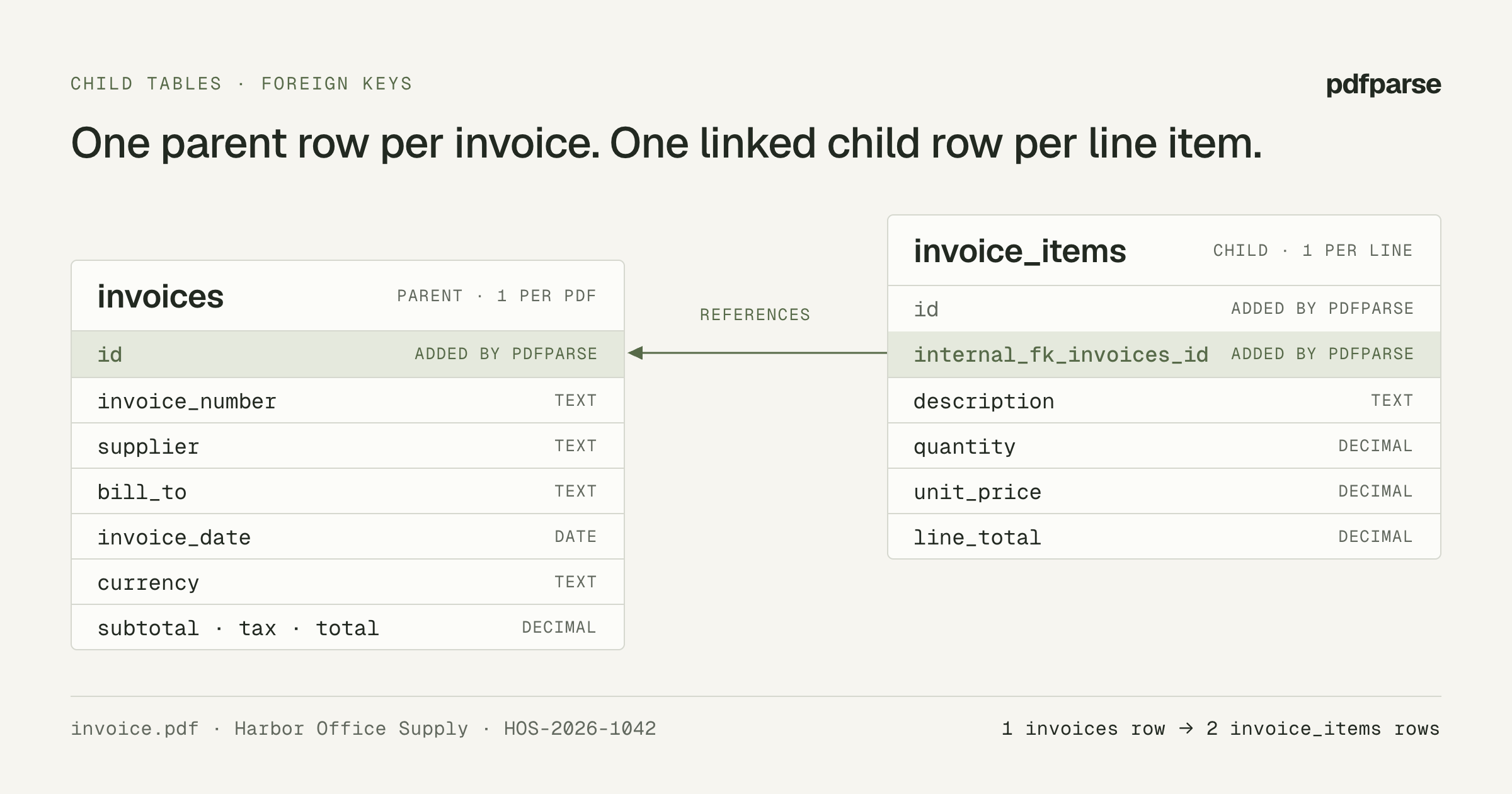
Model an invoice as a parent table with a line-items child table in PdfParse, create it in the dashboard or API, and verify the linked rows with SQL.
Read article